
ATEX Lumini LED antiexplozie pentru zone periculoase
What are explosion proof lights ?
Explosion proof LED lights are built for areas where a spark or a hot surface would be a problem: refineries, chemical plants, gas stations, paint shops and mines. The housing is not simply sealed — the flame path, the cable entries and the surface temperature are all part of the certification, and the certificate has to cover the exact model on the wall.
Amasly supplies Ex d and Ex e luminaires for gas groups IIA, IIB and IIC, from 20 W bulkheads to 300 W high bays, with ATEX and CE documentation issued per model. Tell us the zone, the gas group and the mounting height, and we will match the fitting to the area rather than to the catalogue.
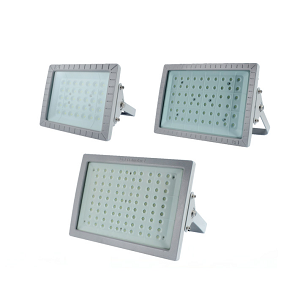
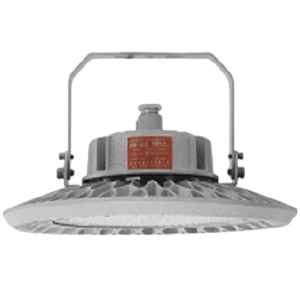
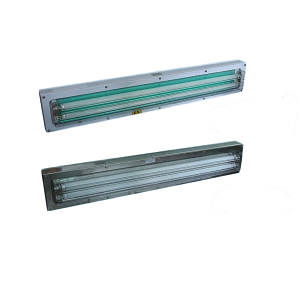
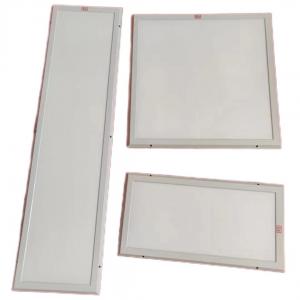
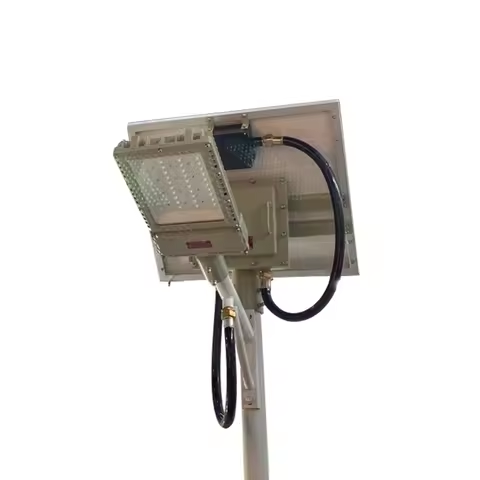
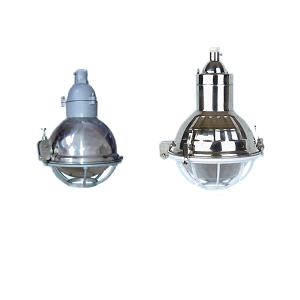
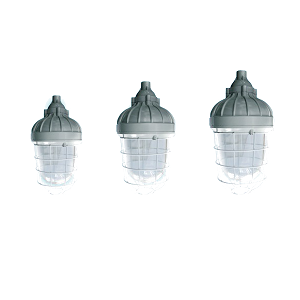
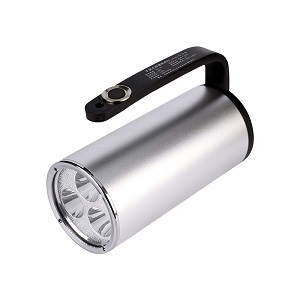
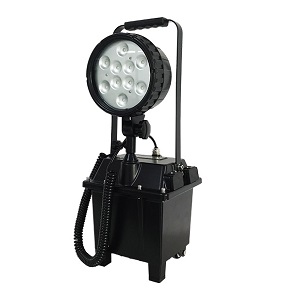
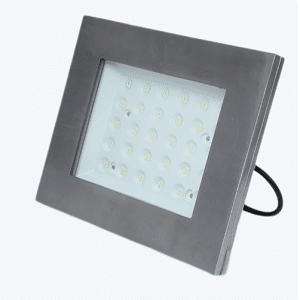
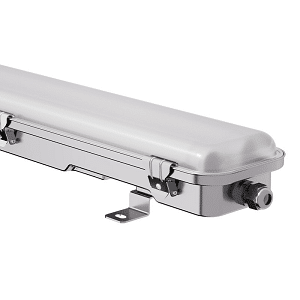
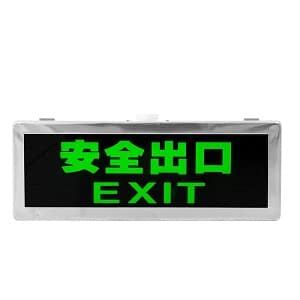
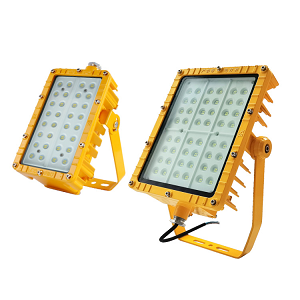
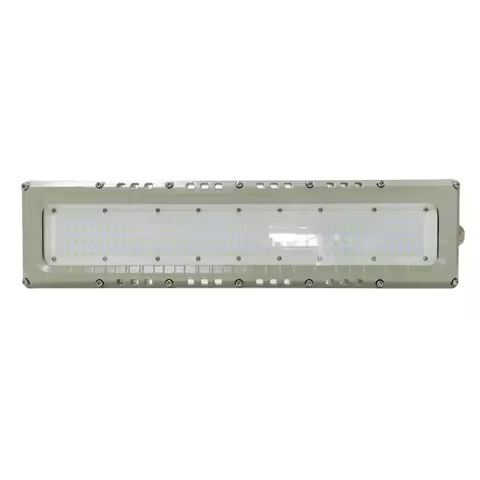
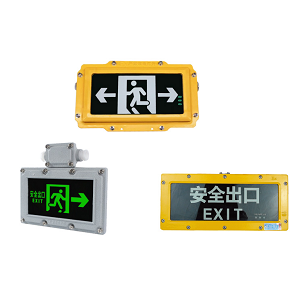
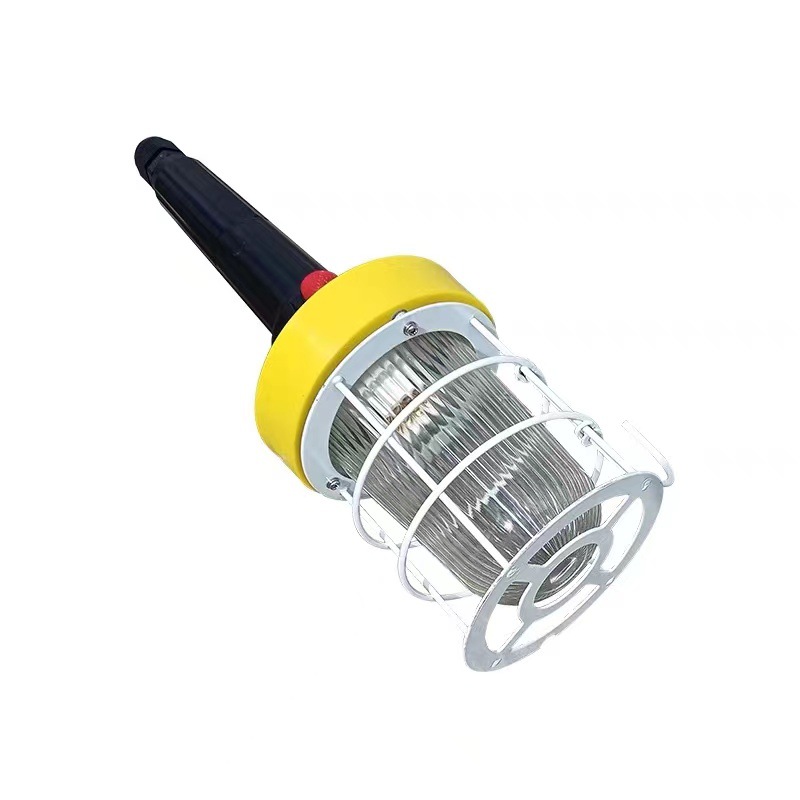
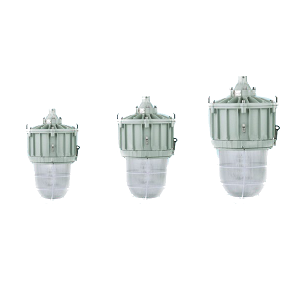
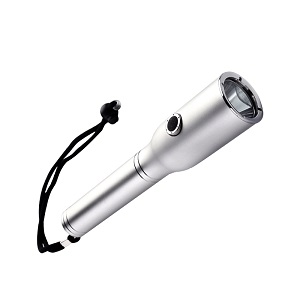
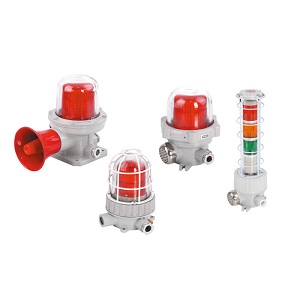
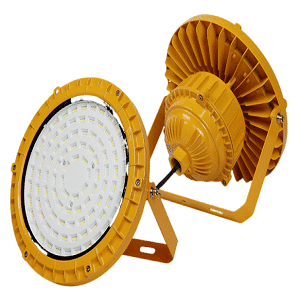
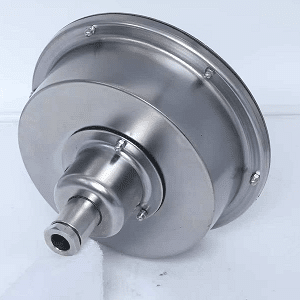
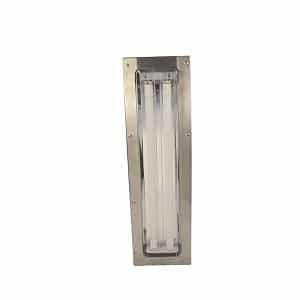
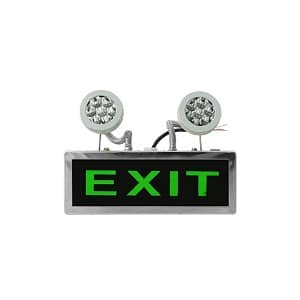
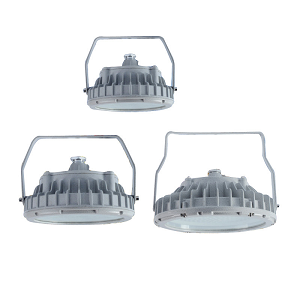
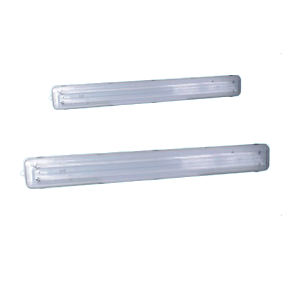
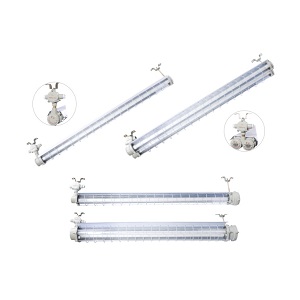
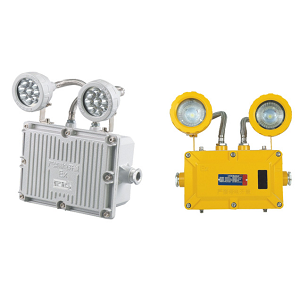
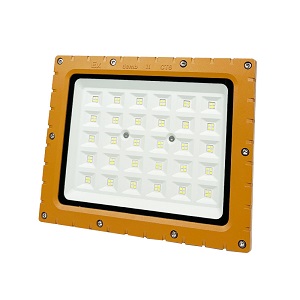
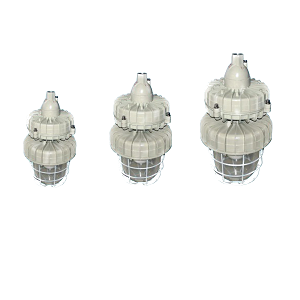
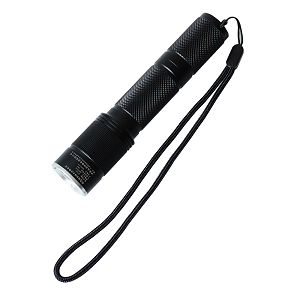
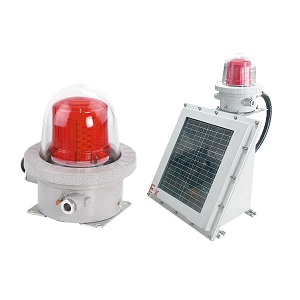
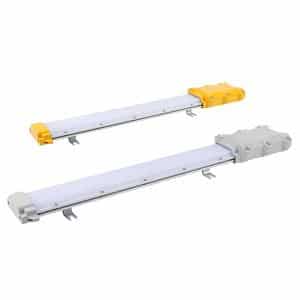
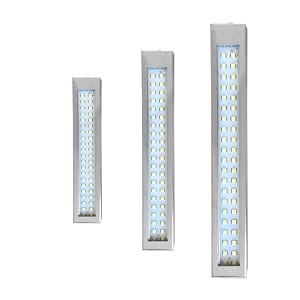
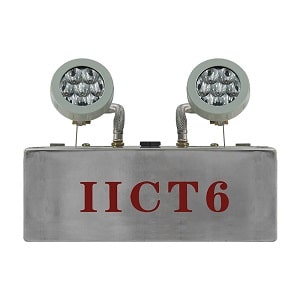
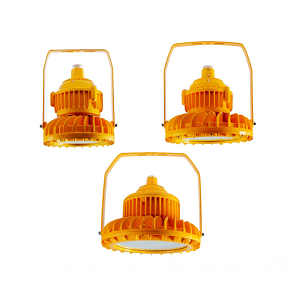
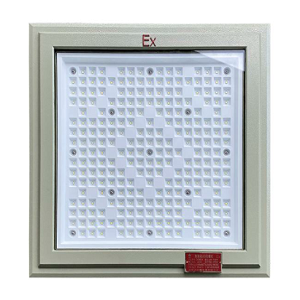
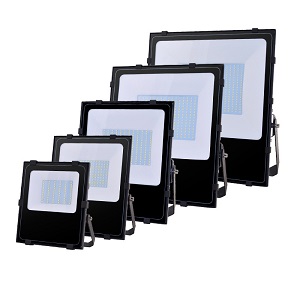
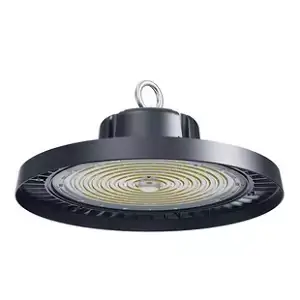
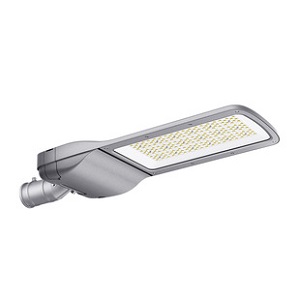
Luminile antiexplozive sunt împărțite în funcție de formă: lumini antiexplozive rotunde (lumini antiexplozive high bay), lumini antiexplozive pătrate (lumini antiexplozive flood), lumini antiexplozive liniare, lumini antiexplozive pentru ieșiri de urgență, lumini de lucru mobile antiexplozive, lumini stradale antiexplozive.
Where install different Explosion Proof Lights ?
Four shapes cover almost every hazardous area, and the shape follows the mounting height before it follows the wattage. High bays belong where the ceiling sits six metres or higher — pipe racks, tank farms, loading gantries, large workshops — and want a 60–90 degree beam so the output reaches the floor instead of the walls. Floodlights mount on walls, brackets and gantry undersides at two to eight metres, lighting platform edges, storage yards and ship berths; an asymmetric distribution keeps the beam out of the crane cab glass. Linear fittings sit at one to three metres along walkways, cable trays, pipe galleries and control rooms inside the zone, where a continuous row gives an even line of light without the dark gaps a row of high bays leaves behind. Emergency and exit units are the fourth group, and the only one that has to work when nothing else does: check the battery duration the local code asks for, whether the unit self-tests, and whether the exit legend matches the site’s language requirements.
Form factor, mounting height and typical duty
| Form factor | Înălțimea de montare | Where it goes | Typical power | Beam |
| High bay | 6–12 m | Pipe racks, tank farms, loading gantries, workshops | 50–300 W | 60–90° |
| Floodlight | 2–20 m | Platform edges, storage yards, berths, gantry soffits | 30–600 W | asymmetric |
| Linear | 1–3 m | Walkways, cable trays, pipe galleries, control rooms | 18–100 W | wide rows |
| Emergency / exit | 2.2–2.8 m | Exit routes, stair heads, switch rooms, gate houses | 3–10 W | legend |
The three numbers that decide the model
Three numbers decide whether a fitting is right, and price comes after them. The Ex marking has to match the zone and the gas group: Zone 1 normally takes category 2G equipment, Ex d or Ex e; Zone 2 can take 3G; group IIB covers most hydrocarbons, while hydrogen, acetylene and carbon disulfide need IIC. Fitting a IIB enclosure into a IIC area is the expensive mistake, because the flame path clearances that quench a IIB flame will not quench a IIC one. Ingress protection comes next — IP65 is the working baseline, IP66 or IP67 for wash-down bays, coastal salt and exposed gantries — and the rating is only as good as the gland that was fitted with it. Then power against mounting height, worked backwards from the lux you need on the surface: 100 W at 150 lm/W gives about 15,000 lm, and at eight metres with a narrow beam that covers a circle of roughly ten metres at usable levels, while a wide beam at the same height spends half its output on the walls. Ambient temperature closes the list, because a driver rated for 40 °C will not reach its life figure at 55 °C — ask for the high-temperature version or derate the wattage.
Frequently asked questions
What does “Ex d” mean on the label?
Ex d is a flameproof enclosure. It is allowed to have an explosion inside it, and it is built to contain that explosion and cool the flame before it leaves through the joint. The cover bolts, the machined flange and the gap between them are part of the certificate, which is why a substitute bolt voids it.
Zone 1 or Zone 2 — which one do I need?
Zone 1 covers places where a flammable atmosphere is likely during normal operation, and takes category 2G equipment. Zone 2 is where it is unlikely and short-lived, and 3G is permitted. Plenty of plants specify 2G in Zone 2 anyway so the spares fit both, and that is a decision to make with the area drawing, not with the price list.
Is IP65 enough outdoors?
For a sheltered gantry, yes. For wash-down bays, coastal sites and exposed structures, specify IP66 or IP67 and add the corrosion class — C5-M or WF2 — because salt and hydrogen sulfide attack the housing long before water gets in. The gland and the stopping plugs have to carry the same rating as the housing.
Can a IIB light be installed where IIC is required?
No. The flame path clearances that work for IIB are too wide for IIC. Two housings can look identical and carry different markings, so check the label against the area drawing rather than against the photo.
What do you need to prepare a lighting layout?
Five items: the area or zone drawing, the gas group, the mounting height, the ambient temperature range, and the lux level required on the working surface. With those we return a layout with model numbers, quantities and beam angles.If the specification is still open, send those five items and we will come back with a layout rather than a product list. For projects already at tender stage, the model-specific ATEX and CE documents can be issued with the quotation.


Cunoștințe generale privind luminile antideflagrante
1. principiul echipamentelor electrice rezistente la explozie
| tip rezistent la explozie | principiu antideflagrant | Aplicație |
| Siguranță sporită tip "e" | Echipamentele electrice care nu generează arcuri sau scântei în condiții normale de funcționare sunt protejate prin măsuri suplimentare pentru a spori siguranța și fiabilitatea acestora și pentru a preveni generarea de temperaturi periculoase, arcuri și scântei de la componentele interne și externe ale acestora. | iluminat antideflagrant, motoare antideflagrante, cutii de joncțiune antideflagrante, fișe și prize Ex, furtunuri de conectare flexibile Ex |
| Rezistent la flăcări "d" | O incintă pentru echipamente electrice care poate rezista fără daune la explozia unui amestec combustibil care a pătruns în interiorul incintei și care nu va aprinde o atmosferă explozivă externă formată din unul sau mai multe gaze sau vapori prin orice îmbinări sau găuri structurale din incintă. | cutie de distribuție antiexplozie, buton antiexplozie, coloană de comandă antiexplozie, întrerupător antiexplozie, lampă antiexplozie, motor antiexplozie. |
| Presiune pozitivă tip "p" | Presiunea pozitivă de tip "p" reduce concentrația amestecului exploziv din interior sub limita de explozie prin menținerea presiunii gazului de protecție din interior mai mare decât cea din zona înconjurătoare pentru a evita pătrunderea amestecului exploziv în incintă sau trecerea unei cantități suficiente de gaz de protecție prin incintă, astfel încât concentrația amestecului exploziv din interior să fie redusă sub limita de explozie. | cabină de analiză antideflagrantă, unitate de control și distribuție a energiei antideflagrantă |
| Intrinsec sigur "i" | În condițiile de încercare specificate, scânteile electrice și efectele termice generate de circuitele din interiorul echipamentului în funcționare normală sau în condițiile de defecțiune specificate nu trebuie să aprindă amestecul exploziv specificat.Echipament electric care nu poate aprinde gazele sau vaporii explozivi specificați în condițiile de încercare specificate sau în condițiile de defecțiune specificate. | echipamente de comunicare antiexplozie, senzori antiexplozie, echipamente de măsurare și control antiexplozie. |
| Tip turnat "m" | Partea din arc, scânteie sau temperatură ridicată care poate produce aprinderea unui amestec exploziv este turnată astfel încât să nu poată aprinde amestecul de gaze explozive din jur. | transformatoare antideflagrante |
2. Relația dintre clasificarea, nivelurile de gaze sau vapori din incintă și tipurile, clasele de echipamente a căror utilizare este permisă
| Gaze/vapori/clasificare/radiații în spații | Clase de echipamente permise |
| IIA (de exemplu propan, pentan, benzen, benzină, etanol, acetaldehidă, acetonă, metilamină etc.) | IIA, IIB sau IIC |
| IIB (de exemplu, etilenă, eter dimetilic, gaz de cocserie etc.) | IIB sau IIC |
| IIC (de exemplu: hidrogen, acetilenă și disulfură de carbon) | IIC |
3. Relația dintre grupurile de temperatură, temperaturile de suprafață ale echipamentelor și temperaturile de aprindere ale gazelor sau vaporilor inflamabili
| Grup de temperatură | Temperatura de aprindere a gazului sau vaporilor ℃ | Temperatura maximă de suprafață a echipamentelor electrice ℃ |
| T1 | T>450 | 450 |
| T2 | 450≥T>300 | 300 |
| T3 | 300≥T>200 | 200 |
| T4 | 200≥T>135 | 135 |
| T5 | 135≥T>100 | 100 |
| T6 | 100≥T>85 | 85 |
Clasificarea luminii antideflagrante:
1. În funcție de formă, se împart în: lumină rotundă antiexplozivă (lumină antiexplozivă high bay), lumină pătrată antiexplozivă (lumină de inundație antiexplozivă), lumini lungi antiexplozive, lumini de ieșire de urgență antiexplozive, lumini mobile antiexplozive, lumini stradale antiexplozive.
2. În funcție de tipul de protecție împotriva exploziilor, este împărțit în protecție împotriva exploziilor, siguranță sporită, presiune pozitivă, tip fără scântei și protecție împotriva exploziilor de praf, un total de cinci tipuri majore, dar, de asemenea, de alt tip de protecție împotriva exploziilor și tipul de protecție împotriva exploziilor de mai sus sau o combinație de diferite tipuri de tip compozit și special.
Amasly LED Light ÎNTREBĂRI FRECVENTE
Q1.Can I have a sample order for led light?
R: Da, acceptăm comanda de probe pentru a testa și a verifica calitatea. Probele mixte sunt acceptabile.
Q2.Ce se întâmplă cu timpul de livrare?
R: Proba necesită 3-5 zile, timpul de producție în masă necesită 1-2 săptămâni.
Q3.Aveți vreo limită MOQ pentru comanda de lumină led?
R: MOQ scăzut 1pc pentru verificarea eșantionului este disponibil.
Q4. Cum expediați bunurile și cât durează până ajung la destinație?
R: De obicei expediem prin DHL, UPS, FedEx sau TNT. De obicei, este nevoie de 3-5 zile pentru a ajunge. Linia aeriană și transportul maritim, de asemenea, opțional.
Q5. Cum se efectuează o comandă pentru lumina cu led?
A:
În primul rând, comunicați-ne cerințele sau aplicația dumneavoastră.
În al doilea rând, cotizăm în funcție de cerințele dvs. sau de sugestiile noastre.
În al treilea rând, clientul confirmă probele și plasează depozitul pentru comanda oficială.
În al patrulea rând, organizăm producția.
Q6.Este în regulă să îmi tipăresc LOGO pe produs de lumină cu led ?
R: Da.Vă rugăm să ne informați oficial înainte de producția noastră și să confirmați designul în primul rând pe baza eșantionului nostru.
Q7: Oferiți garanție pentru produse?
R: Da, oferim o garanție de 2-5 ani pentru produsele noastre.
Î8: Cum să procedați cu defectele?
A:
În primul rând, produsele noastre sunt produse dinstrict sistem de control al calității și rata defectuoasă va fi mai mică de 0.2%
În al doilea rând, în timpul perioadei de garanție, vom furniza piese pentru a înlocui piesa defectă.. Pentru comenzile în vrac, vom furniza piese vulnerabile în avans sau putem discuta soluții, inclusiv rechemări, pe baza situației reale.
Produse conexe
 Romanian
 English
 Spanish
 Arabic
 German
 French
 Russian
 Indonesian
 Thai
 Vietnamese
 Malay
 Italian
 Portuguese
 Greek
 Turkish
 Korean
 Japanese
 Dutch