
Designguide til højmastbelysning til atletik og atletik | standarder for belysningslayout og belysningsstyrke for forskellige banestørrelser, alt i én artikel
Som designer af højmastbelysning til atletikbaner bliver jeg ofte spurgt: “På den samme bane, hvorfor har nogle lys, ensartet belysning, mens andre har mørke pletter og blænding?”
Svaret er enkelt - lysdesign er ikke “one-size-fits-all”. Kerneprincippet er at “tilpasse belysningen til banens størrelse og til brugsscenariet”. Banernes dimensioner varierer betydeligt, fra professionelle 400 m standardbaner i konkurrenceklassen til 300 m og 200 m ikke-standardbaner, der ofte bruges i skoler og lokalsamfund. Hver størrelse har klare specifikationer for belysningslayout, krav til belysningsstyrke og valg af armatur. Denne artikel dækker alt grundigt, så uanset om du designer et nyt anlæg eller eftermonterer et eksisterende, kan du henvise til den og anvende den direkte.
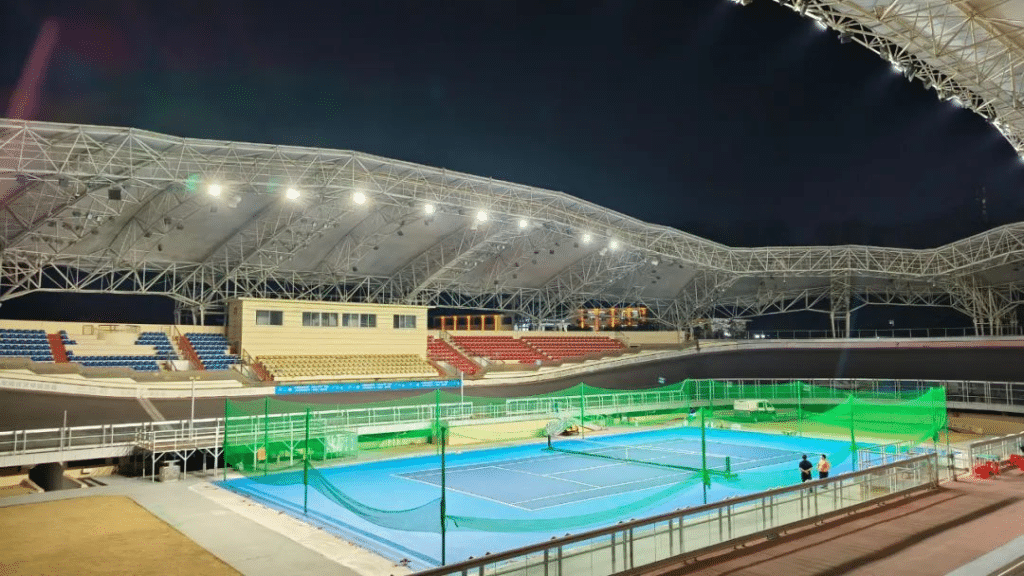
Først, atletik og fodbold Høj mastbelysning: Præciser de grundlæggende forudsætninger: Klassificering af atletikbaner (efter størrelse + brug)
Først skal du skelne mellem banetypen. Forskellige banetyper har forskellige centrale belysningskrav - professionelle konkurrencer kræver sømløs, høj ensartethed, mens skole-/samfundsarenaer afbalancerer energieffektivitet og praktisk anvendelighed. I henhold til de relevante standarder fra det kinesiske atletikforbund er de hovedsageligt opdelt i følgende tre kategorier, som også er kernemålene for vores belysningsdesign:
- Kategori I-steder (professionel konkurrenceklasse): 400 m standardbane, kurveradius 36,5 m (foretrukket), mindst 8 kurvebaner og 8 lige baner. Bruges til at afholde forskellige professionelle atletikkonkurrencer, der kræver de højeste belysningsstandarder for at opfylde behovene for HD-transmissioner og præcis dømmekraft.
- Kategori II-steder (træning og undervisning): 400 m oval bane, mindst 6 kurvebaner. Bruges mest til daglig træning i skoler og på sportsanlæg, men også til mindre konkurrencer. Belysningen skal sikre klarhed i træningen og visuel komfort.
- Kategori III-steder (rekreation og fitness): Ikke-standardiserede baner (hovedsageligt 300 m, 200 m), mindst 4 ovale baner. Findes ofte i lokalsamfund og små skoler. De vigtigste krav er grundlæggende belysning, energieffektivitet og holdbarhed uden væsentlige mørke pletter.
Her er det vigtigste punkt: Detaljeret belysningslayout + standarder for belysningsstyrke for forskellige skinnestørrelser
Kernen i belysningsdesign er “at opnå standardbelysningsstyrke + ensartethed uden blænding”. Belysningsstyrke (Lux) er en nøgleindikator - den repræsenterer den mængde lysstrøm, der modtages pr. arealenhed; jo højere værdi, jo kraftigere er lyset. Ensartethed afgør, om der er forskelle i lysstyrken på tværs af arenaen, hvilket forhindrer visuelle uoverensstemmelser for atleter og officials. Nedenfor er en detaljeret oversigt over designpunkter baseret på banestørrelse, som designere kan henvise direkte til.
I. 400 m standardbane (kategori I/II-steder) - lysdesign i professionel kvalitet
400 m standardbanen er den mest almindelige type, som er opdelt i en professionel konkurrenceversion (kategori I) og en trænings- og instruktionsversion (kategori II). De største forskelle i lysdesign mellem de to ligger i belysningsstyrke og armaturkonfiguration, mens layoutlogikken forbliver den samme.
1. Principper for belysningslayout
Vedtag en “firehjørnet højmastlayout som det primære, suppleret med sidebelysning” for at sikre fuld dækning og ensartethed og forhindre mørke pletter ved krydsninger af kurver og lige strækninger.
- Polens placering: Placeres i de fire hjørner af banen, 5-8 m fra banekanten for at undgå at hindre udsyn eller atleternes bevægelser. Hvis arenaen er stor (kategori I), skal der tilføjes 2-4 ekstra høje master uden for de lige baner for at supplere belysningen for enden af de lige baner.
- Stolpehøjde: Et vigtigt parameter! For kategori I-steder (professionelle konkurrencer) bør mastehøjden være 25-30 m; for kategori II-steder (træning og instruktion) 20-25 m, hvilket sikrer, at lyset dækker hele banen jævnt og reducerer skyggeoverlapningen.
- Armaturets vinkel: Projektionsvinkel på 15°-25°, med en projektionsvinkel til banekanten på højst 75°. Brug armaturer af typen cut-off for at forhindre, at lyset skinner direkte ind i atleternes øjne, og kontroller blændingen nøje.
2. Standarder for belysningsstyrke (kerne, skal læses)
Klassificeret efter brugsscenarie, i overensstemmelse med det kinesiske atletikforbund og standarder for lysdesign, der præcist matcher forskellige behov.
| Stedets type | Brugsscenarie | Gennemsnitlig vandret belysningsstyrke (Lux) | Ensartethed i belysningsstyrke | Blændingsgrad (GR) |
|---|---|---|---|---|
| Kategori I (400 m professionel) | Professionel konkurrence + HD-transmission | ≥ 1500 | ≥ 0.7 | ≤ 50 |
| Kategori I (400 m professionel) | Daglig træning | 500 - 1000 | ≥ 0.6 | ≤ 55 |
| Kategori II (400 m instruktion) | Træning + små konkurrencer | 300 - 500 | ≥ 0.5 | ≤ 55 |
3. Anbefalinger til valg af armatur
Prioritér LED-lyskilder, der afbalancerer energieffektivitet og holdbarhed. Specifikke parametre skal matche stedets behov:
- Kraft: Den samlede effekt pr. mast for kategori I-steder er 800-1200W; for kategori II-steder 600-800W. Brug modulært design for at muliggøre udskiftning af et enkelt modul, hvilket reducerer vedligeholdelsesomkostningerne.
- Lyseffektivitet og farvegengivelse: Lysudbytte ≥ 150 lm/W, farvegengivelsesindeks (Ra) ≥ 80 (Ra ≥ 90 til professionelle konkurrencer), nøjagtig gengivelse af banens farver og atleternes hudtoner, velegnet til HD-udsendelser.
- Beskyttelse mod indtrængen: ≥ IP67, der giver vandtæt, støvtæt og korrosionsbestandig ydeevne til udendørs forhold. Også udstyret med intelligent temperaturkontrolleret varmeafledningssystem for at forlænge armaturets levetid.
II. 300 m ikke-standardiseret bane (kategori III-sted) - praktisk lysdesign
300 m-baner bruges mest i skoler og lokalsamfund med mindre kurveradier (typisk 25-30 m) og banebredder på omkring 1,22 m. Belysningsdesignet fokuserer på “praktisk anvendelighed, energieffektivitet og ingen mørke pletter” uden overdreven stræben efter høj belysningsstyrke.
1. Principper for belysningslayout
Der anvendes et “symmetrisk layout på begge sider”, hvilket eliminerer behovet for høje master i fire hjørner, forenkler layoutet og reducerer omkostningerne, hvilket passer til behovene på små steder.
- Polens placering: Symmetrisk placeret langs ydersiderne af banens lange kanter, med 3-4 pæle pr. side, med 30-40 m mellemrum (pæleafstanden er 3-4 gange pælehøjden), som dækker hele banen.
- Stolpehøjde: 15-20 m, ingen grund til overdreven højde for at undgå spild af lys og reducere lysforurening.
- Armaturets vinkel: Projektionsvinkel på 20°-30° med fokus på at dække krydsene mellem kurver og lige strækninger for at undgå skyggedøde zoner.
2. Standarder for belysningsstyrke
Det er ikke nødvendigt at leve op til professionelle konkurrencestandarder; det skal matche dagligdags brugsscenarier:
- Daglig fitness, fritidsaktiviteter: Gennemsnitlig vandret belysningsstyrke 100-200 Lux, ensartethed ≥ 0,4.
- Grundlæggende skoletræning, små sjove konkurrencer: Gennemsnitlig vandret belysningsstyrke 200-300 Lux, ensartethed ≥ 0,5.
- Blændingsgrad (GR) ≤ 60, for at undgå blænding og sikre sportssikkerheden.
3. Anbefalinger til valg af armatur
Prioriter energieffektive LED-armaturer for at kontrollere omkostningerne og samtidig opfylde brugsbehovet.
- Kraft: Samlet effekt pr. stolpe 300-500W, understøtter tidsbaseret dæmpning, arbejder ved lav effekt til daglig brug for at spare energi.
- Lyseffektivitet og farvegengivelse: Lysudbytte ≥ 140 lm/W, farvegengivelsesindeks (Ra) ≥ 75, tilstrækkeligt til tydeligt at identificere spormarkeringer.
- Beskyttelse mod indtrængen: ≥ IP65, giver grundlæggende vandtæt og støvtæt ydeevne til udendørs brug, intet behov for avancerede konfigurationer.
III. 200 m ikke-standardiseret bane (kategori III-sted) - lysdesign på basisniveau
200 m-baner bruges for det meste i små skoler og kommunale fitnessområder med kort omkreds og smal bredde (typisk 4 baner). Belysningsdesignet fokuserer på “grundlæggende belysning, enkelhed og holdbarhed” uden komplekse layouts.
1. Principper for belysningslayout
Brug et “simpelt layout med én eller to sider”, der kan justeres fleksibelt i forhold til spillestedets størrelse med fokus på at dække banens kerneområder.
- Polens placering: 2-3 pæle på den ene side eller 2 pæle symmetrisk på begge sider, placeret 3-5 m fra banekanten for at undgå at optage plads på spillestedet.
- Stolpehøjde: 12-15 m, velegnet til små lokaler, hvilket sikrer, at lyset dækker hele banen uden væsentlige mørke pletter.
- Armaturets vinkel: Projektionsvinkel på 30°-40° ved hjælp af vidvinkellinser (120°-150°) for at udvide belysningsområdet og reducere antallet af armaturer.
2. Standarder for belysningsstyrke
Opfylder grundlæggende brugsbehov, intet behov for høj belysningsstyrke for at undgå energispild.
- Daglig fitness, gåture: Gennemsnitlig vandret belysningsstyrke 50-100 Lux, ensartethed ≥ 0,3.
- Grundlæggende træning for folkeskoleelever: Gennemsnitlig vandret belysningsstyrke 100-150 Lux, ensartethed ≥ 0,4.
- Blændingsgrad (GR) ≤ 65, for at undgå at påvirke ældres og børns sportssikkerhed.
3. Anbefalinger til valg af armatur
Vælg økonomiske og praktiske LED-armaturer, der prioriterer omkostningskontrol og nem vedligeholdelse.
- Kraft: Samlet effekt pr. stolpe 200-300W, kompakt og let, nem at installere og vedligeholde.
- Lyseffektivitet og farvegengivelse: Lysudbytte ≥ 130 lm/W, farvegengivelsesindeks (Ra) ≥ 70, hvilket er tilstrækkeligt til at identificere sporet tydeligt.
- Beskyttelse mod indtrængen: ≥ IP65, der giver grundlæggende vandtæt ydeevne til udendørs miljøer og prioriterer omkostningseffektivitet.
Must-read for designere: Generelle forholdsregler (Guide til at undgå faldgruber)
Uanset sporets størrelse skal belysningsdesignet følge følgende 4 punkter for at undgå faldgruber og sikre belysningens effektivitet og brugernes sikkerhed:
- Blændingskontrol er nøglen: Uanset om det drejer sig om professionelle eller almindelige arenaer, skal man undgå lys, der skinner direkte ind i øjnene på atleter og officials. Prioritér armaturer af cut-off-typen med en afskærmningsvinkel på ≥ 40°, kombineret med dybe afskærmningskabinetter for at reducere blænding.
- Ensartethed prioriteres over belysningsstyrke: Det er bedre at have en lidt lavere belysningsstyrke end at have forskelle i lysstyrke. Brug lyssimuleringssoftware som DIALux til fotometrisk 3D-modellering for at optimere stolpepositioner og armaturvinkler.
- Kombiner energieffektivitet med intelligens: Prioriter LED-lyskilder, understøt on-demand dæmpning og tidsbaseret kontrol. Skift lysstyrke i henhold til brugsscenarier (træning, konkurrencer, fritid) for at reducere driftsomkostningerne.
- Sikkerhedsbeskyttelse er afgørende: Installer lynbeskyttelsesanordninger i toppen af masterne med en jordingsmodstand på mindre end 10Ω. Armaturer skal have design, der forhindrer fald og kortslutning. Brug strækbare, aldringsbestandige fleksible kabler til kabler for at sikre udendørs sikkerhed.
Tip: Lysdesignet skal justeres grundigt ud fra de faktiske banedimensioner, brugen af spillestedet og det omgivende miljø. Ovenstående er generelle standarder. Der kan udvikles skræddersyede løsninger baseret på specifikke forhold på spillestedet (f.eks. tilstedeværelse af tribuner, skygge fra omkringliggende bygninger). Som designer anbefales det, at man først laver en model med lyssimuleringssoftware, før man færdiggør layoutplanen for at sikre, at belysningseffektiviteten lever op til standarderne.
Konklusion
Kernen i design af højmastbelysning til atletik er “tilpasning” - tilpasning til banens størrelse, brugsscenarie og budget. Til professionelle 400 m-baner i konkurrenceklassen skal man stræbe efter høj belysningsstyrke og høj ensartethed. Til 300 m og 200 m baner i skoler og lokalsamfund skal man finde en balance mellem praktisk anvendelighed og energieffektivitet.
Ved at beherske ovenstående layoutprincipper og standarder for belysningsstyrke kan du effektivt opnå resultater og undgå omveje, uanset om du designer et nyt sted eller eftermonterer et eksisterende. Hvis du har brug for en skræddersyet belysningsløsning baseret på stedets specifikke dimensioner (f.eks. brugerdefineret kurveradius, antal baner), er du velkommen til at diskutere det.
Gem denne artikel, henvis direkte til den i dit næste design, og håndter nemt højmastbelysning til baner i forskellige størrelser!
✨ Professionelt design af bane- og feltbelysning, der sikrer, at hvert løb er klart og lyst ✨
Ofte stillede spørgsmål om Amasly Light
Q1. Kan jeg få en prøveordre på led-lys?
A: Ja, vi byder prøveordre velkommen til at teste og kontrollere kvaliteten. Blandede prøver er acceptable.
Q2. Hvad med leveringstiden?
A: Prøven tager 3-5 dage, masseproduktionstiden tager 1-2 uger.
Q3.Har du nogen MOQ-grænse for ledet lysordre?
A: Lav MOQ 1pc til prøvekontrol er tilgængelig.
Q4. Hvordan sender I varerne, og hvor lang tid tager det at få dem frem?
A: Vi sender normalt med DHL, UPS, FedEx eller TNT. Det tager normalt 3-5 dage at ankomme. Luftlinje og søfart er også valgfri.
Q5. Hvordan fortsætter man en ordre på led-lys?
A:
Fortæl os først om dine krav eller din ansøgning.
For det andet giver vi tilbud i henhold til dine krav eller vores forslag.
For det tredje bekræfter kunden prøverne og lægger et depositum for den formelle ordre.
For det fjerde arrangerer vi produktionen.
Q6. er det ok at printe min LOGO på led-lys produkt?
A: Ja, informer os venligst formelt inden vores produktion og bekræft først designet baseret på vores prøve.
Q7: Tilbyder du garanti for produkterne?
A: Ja, vi tilbyder 2-5 års garanti på vores produkter.
Q8: Hvordan håndterer man de defekte?
A:
For det første producerer vores produkter dinstrict kvalitetskontrolsystem, og den defekte sats vil være mindre end 0,2%
For det andet vil vi i løbet af garantiperioden levere dele til at erstatte den dårlige del. Ved bulkordrer leverer vi sårbare dele på forhånd, eller vi kan diskutere løsninger, herunder tilbagekaldelser, baseret på den faktiske situation.
Q9: Kan vi lave eksplosionssikre lavspændingslamper med AC/DC-spændinger på 12V, 24V, 36V eller 48V?
Amasly kan bruges som både lavspændings- og højspændings eksplosionssikkert lys - AC/DC 12V, 24V, 36V, 48V, AC 85-265V, AC 380V.
Q10: Kan der tilføjes nødbatterier til Explosion Poof Lights?
Den eksplosionssikre Amasly-lampe kan udstyres med lithium-nødbatterier. Nødvarigheden er 90 minutter, 120 minutter eller 180 minutter.
Q11: Kan Amaslys eksplosionssikre lampe tilpasses som et OEM-produkt?
Amasly eksplosionssikre lamper kan tilpasses efter kundens krav til både lamperne og emballagekartonerne.
Relaterede produkter
 DA
DA  EN
EN  ES
ES  AR
AR  DE
DE  FR
FR  RU
RU  IT
IT  PT
PT  ES_MX
ES_MX  RO
RO  EL
EL  TR
TR  KO
KO  HU_HU
HU_HU  JA
JA  NL
NL  BG
BG  CS
CS  SK
SK  UK
UK  TH
TH  VI
VI  ID
ID  MS
MS  TL
TL