
60 watt vs. 100 watt lamps: what’s the difference and which is better?
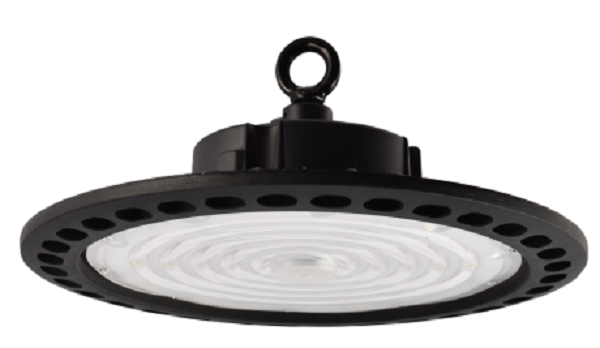
Are you planning to replace your old 60-watt bulbs with 100 Watt Lamps? Whether you’re planning to replace your old HID lights (such as fluorescents, halogens, etc.) with 100-watt equivalent LEDs, or you simply want to switch to a higher wattage bulb, you should read this article.
In this article, we will compare 60 watt and 100 Watt Lamps to see which is better. In addition, we’ll tell you if it’s feasible to use a 100-watt bulb in a 60-watt fixture. Read on!
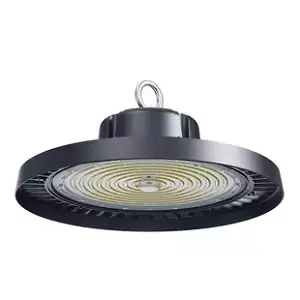
60 vs. 100 watt lamps: what’s the difference and which is better?
sizes
A 60-watt bulb is smaller than a 100-watt bulb. Higher power bulbs are usually larger to dissipate heat more efficiently. The bulbs we use in our daily lives usually have a uniform lamp base model so that they are easy to replace.
Therefore, the more powerful the bulb, the larger its size usually is. Of course, other types of lamps can be customized in size to meet specific application requirements or customer preferences.
Brightness
Before comparing the brightness of a 60 watt and a 100 watt bulb, we must first determine if the two bulbs are the same type. If they are the same type of bulb, then the 100 watt lamps will definitely be brighter than the 60 watt bulb.
If they are not the same type of bulb, then we cannot simply say that the higher the wattage the brighter it will be. This is because, in this case, we cannot measure brightness by power alone, but rather by lumen value, which represents the brightness of the bulb as observed by the human eye. High-power but inefficient bulbs only convert part of the electrical energy into light energy, so they will emit low lumen values.
So, a 60-watt bulb may be brighter than a 100 watt lamps for different types of bulbs. For example, a 60-watt LED bulb is brighter than a 100-watt halogen bulb because LED bulbs are 2-3 times more efficient than halogen bulbs.
resistive
A 60-watt bulb is dimmer, which means that less current flows through the bulb. With the voltage held constant, the current decreases as the resistance increases. Therefore, the 60-watt bulb has a higher resistance. We can also analyze their resistance based on the formula R=V²/P. With the same voltage, the 60-watt bulb has a higher resistance than the 100-watt bulb because resistance increases with decreasing power.
power wastage
Higher-powered bulbs consume more power at a given time. a 60-watt bulb consumes 0.06 kWh of power per hour, while a 100-watt bulb consumes 0.1 kWh of power per hour.
calorific value
A 100-watt bulb consumes more power than a 60-watt bulb, so it generates more heat. When choosing a bulb, you should consider whether its power is sufficient for the brightness you need. Don’t choose bulbs with too much power as they also produce too much heat.
application scenario
Different types and wattage of bulbs have different application scenarios. You can refer to the following about 60 watt and 100 watt incandescent, fluorescent and LED light application scenarios.
LED lights: 60 watts for outdoor areas such as courtyards; 100 Watt Lamps for street lighting
Incandescent: 60 watts for small rooms, such as bedrooms; 100 Watt Lamps for large rooms, such as living rooms
Fluorescent: 60 watts for larger indoor spaces, such as office lobbies; 100 watts for commercial lighting, such as shopping malls
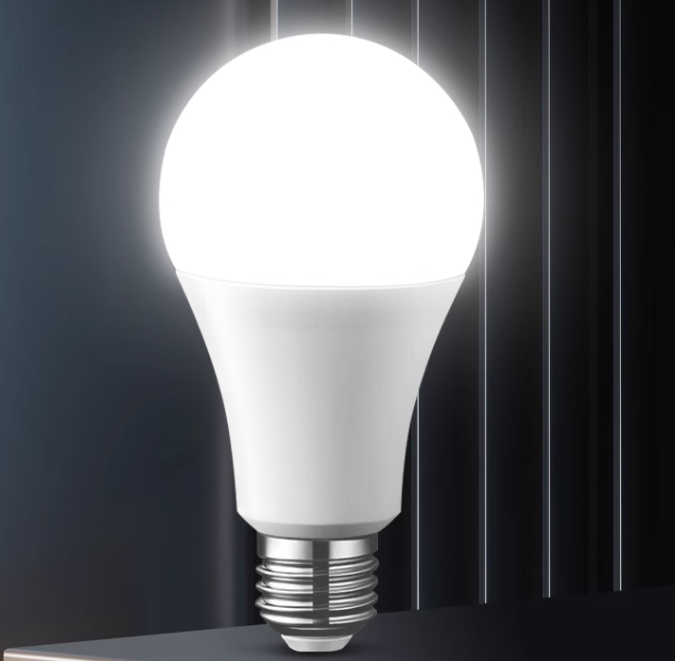
Replace the 60-watt bulb with a 100-watt bulb of the same type:
Using a 100 watt bulb in a 60 watt lamp holder can result in short circuits, breaks, burnouts or fires. The primary cause of these failures is heat.The thermal design of a 60 watt bulb will only ensure proper operation of a 60 watt bulb. If the output is 100 watts, excessive running current can cause the fuse (if any) to blow and the wires to overheat.
In addition, if you replace the bulb, you will also lose the warranty on the bulb. Also, some 100-watt bulbs are larger than 60-watt bulbs, so the bulb and lamp base may not match. For this reason, it is not recommended to use a 100-watt bulb in a 60-watt fixture.
Replace existing 60-watt incandescent, fluorescent, halogen, etc. lamps with 100-watt equivalent LED lamps:
If you want to use a 100 watt incandescent/fluorescent/halogen equivalent LED bulb, it will be well under 60 watts due to the high efficiency of LED bulbs. For example, a 100 watt incandescent equivalent LED bulb may only be 10 to 15 watts. You should then consider whether the bulb’s specifications are compatible.
Some LED bulbs have specially designed lamp bases to maximize heat dissipation. If the heat dissipation is poor, the life of the bulb may be shortened. If you don’t mind this and just want brighter light, then you may want to consider replacing your original 60-watt bulb with a 100-watt equivalent LED bulb.
If it works, these 100-watt equivalent LED bulbs won’t cause much damage because they produce less heat than traditional bulbs.
Summary
60-watt and 100-watt lamps differ in size, brightness, resistance, power consumption, heat generation and application scenarios. You should choose the right bulb according to your actual needs. Replacing a 60-watt bulb with a 100-watt bulb of the same type is not recommended because of the risk of burnout. Under proper conditions, you can replace the original 60-watt conventional bulb with a 100-watt equivalent LED bulb.
Standard: IEC 60598
Related Products
 English
  Spanish (Spain)
  Arabic
  German
  French
  Russian
  Italian
  Portuguese
  Spanish (Mexico)
  Romanian
  Greek
Greek  Turkish
  Korean
  Hungarian
  Japanese
  Dutch
Dutch  Bulgarian
  Czech
Czech  Danish
  Slovak
  Ukrainian
  Thai
Thai  Vietnamese
  Indonesian
  Malay
Malay  Tagalog