
Why choose professional sports lighting fixtures?
In various sports events and daily training sessions, we often focus on the athletes’ outstanding performances while overlooking a crucial behind-the-scenes “hero”—sports lighting.
The core value of professional sports lighting largely stems from the technical characteristics and design advantages of the fixtures themselves. From the type of light source to the optical structure, from the intelligent control system to the material and craftsmanship, every detail directly impacts the lighting effect on the field.
Today, we will delve into why professional sports lighting fixtures are the optimal choice for field lighting from the perspective of the fixtures themselves.
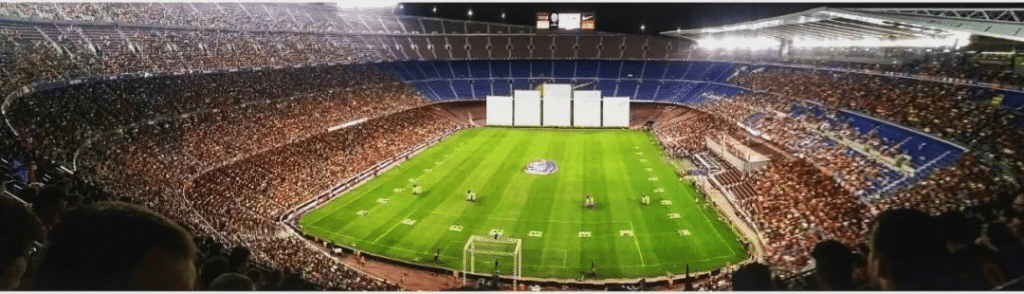
I. Light Source Technology: The Fundamental Logic Determining Core Lighting Performance
The fundamental difference between professional sports lighting fixtures and ordinary lighting fixtures lies in the choice of light source technology. While traditional metal halide lamps were once widely used, they suffer from drawbacks such as slow startup, low luminous efficacy, and short lifespan, and have gradually been replaced by LED light sources.
Professional sports lighting fixtures generally adopt high-quality LED chips, whose core advantages are reflected in three aspects.
·Luminous Efficiency and Energy Savings·
High-quality LED chips achieve luminous efficiencies of 130-150 lm/W, far exceeding the 60-80 lm/W of metal halide lamps. Amasly Sports Lighting LED stadium fixtures can replace 800W-1200W metal halide lamps with a single lamp power of just 300-500W, achieving over 50% energy savings and significantly reducing long-term electricity costs for venues.
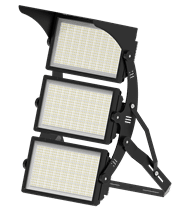
·Stability and flicker-free·
Sports events demand extremely stable lighting, particularly for small ball sports like badminton and table tennis. Professional lighting fixtures achieve this through optimized driver power design, controlling flicker depth to below 3% (far below the national standard of 10%), combined with high-frequency PWM dimming technology. This completely eliminates invisible light fluctuations, preventing visual fatigue and judgment errors among athletes.
·Color Rendering Capability·
The color rendering index (Ra) of professional sports lighting fixtures generally reaches ≥80, with the Amasly Lighting brand series achieving Ra ≥90. High-color-rendering light sources accurately reproduce the color contrast of field markings and the detailed textures of players’ uniforms, enabling referees to clearly identify fouls and allowing audiences to see a more realistic game experience.
II. Optical Design: Precise Light Control for Uniform Field Coverage
The optical design of lighting fixtures directly determines whether light can be uniformly and efficiently distributed across the field. Professional sports lighting fixtures address traditional lighting issues such as “light spot overlap and noticeable dark zones” through customized light distribution solutions. Core technologies include:
·Lens and Reflector Combination·
Lighting fixtures are equipped with specialized optical lenses tailored to the size and height of different sports venues. Basketball arena fixtures commonly use 60°-90° narrow-beam lenses to ensure light is concentrated on the core area of the field; football fields use multi-angle distribution lenses to achieve wide-area coverage. Amasly basketball court fixtures use an asymmetric lens design to improve illuminance uniformity to over 0.8, preventing dark zones under the basket.
·Glare-reduction structure·
Glare control is a critical metric in sports lighting. Professional fixtures address this through a three-pronged design: first, using a deep cavity structure to block direct light; second, applying microtexture treatment to the lens surface to soften light edges; and third, installing a honeycomb grille to restrict light emission angles. Amasly lighting products control glare values (UGR) below 19, ensuring visual comfort for athletes and spectators.
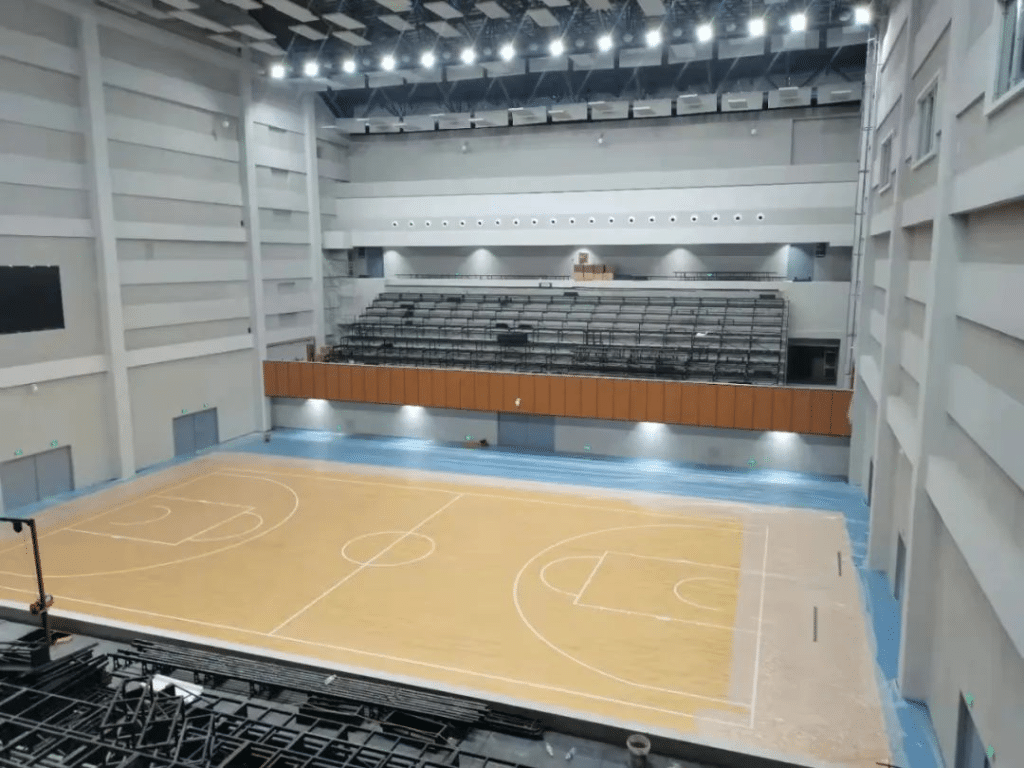
·Optimized Light Distribution Curve·
Lighting fixtures are pre-set with light distribution curves tailored to the characteristics of different sports venues. For example, tennis courts require enhanced vertical illuminance along the sidelines. The fixtures adjust the lens angle to ensure the sideline area has 10%-15% higher illuminance than the court center, enabling referees to clearly determine if the ball lands in or out of bounds.
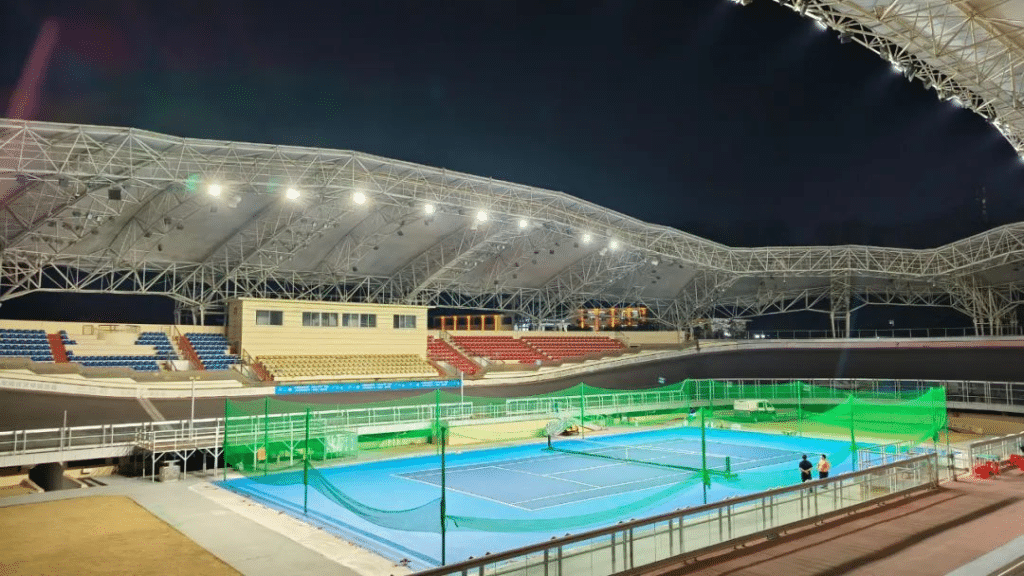
III. Intelligent Control: The “Smart Brain” for On-Demand Dimming
Professional sports lighting fixtures are not isolated but form an interconnected network through an intelligent control system, enabling dynamic and scenario-based lighting management. Its core functions include:
·Multi-scenario Mode Switching·
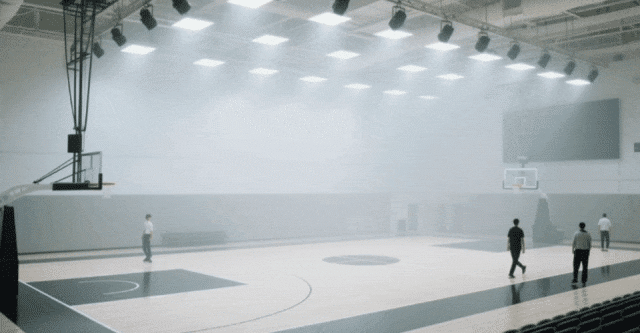
A set of lighting fixtures can be pre-set with multiple modes such as “Match Mode,” “Training Mode,” and “Cleaning Mode.” During matches, the system automatically adjusts to the highest illuminance (e.g., 1000 lux in a basketball arena), reduces to 500 lux during training, and maintains only 30% brightness during cleaning, significantly reducing unnecessary energy consumption.
·Zone-based independent control·
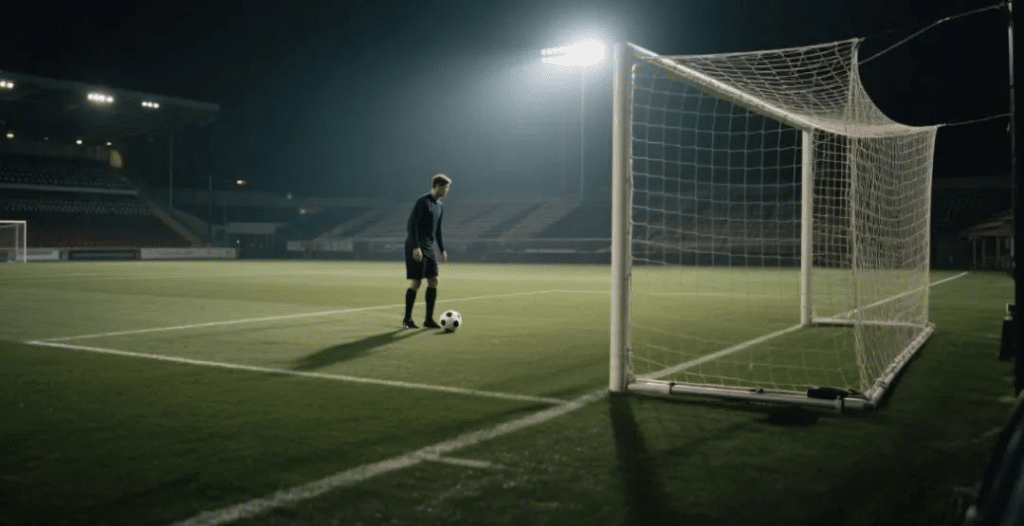
Large sports venues can divide the field into multiple lighting zones, allowing the control system to adjust the brightness of each zone independently. For example, in a football stadium, the goal area lights can be individually brightened to meet penalty kick training requirements; while track lighting can be controlled separately for straight and curved sections to accommodate different training scenarios.
·Remote Monitoring and Fault Alerts·
Smart lighting fixtures are equipped with sensors that monitor parameters such as operating temperature and brightness decay in real time, and feed this data back to managers via a cloud platform. When a fixture malfunctions, the system automatically alerts and locates the fault, reducing maintenance costs and downtime.
IV. Materials and Heat Dissipation: The Hardware Foundation for Long-Term Stable Operation
Sports venue lighting fixtures are installed at high elevations and are difficult to maintain, requiring stringent standards for material durability and heat dissipation capabilities. The investment in hardware directly determines the service life and stability of professional lighting fixtures:
·Heat Dissipation Structure Design·
LED chips generate a significant amount of heat during operation, and high temperatures can accelerate light decay and shorten service life. Professional lighting fixtures use an integrated die-cast aluminum housing combined with a fin-type heat dissipation structure, keeping thermal resistance below 0.8°C/W. Amasly brand lighting fixtures feature an eco-inspired leaf vein fin heat dissipation design, maintaining chip operating temperatures below 60°C and ensuring a 50,000-hour lifespan (approximately twice that of standard LED lights).
·Protection Rating·
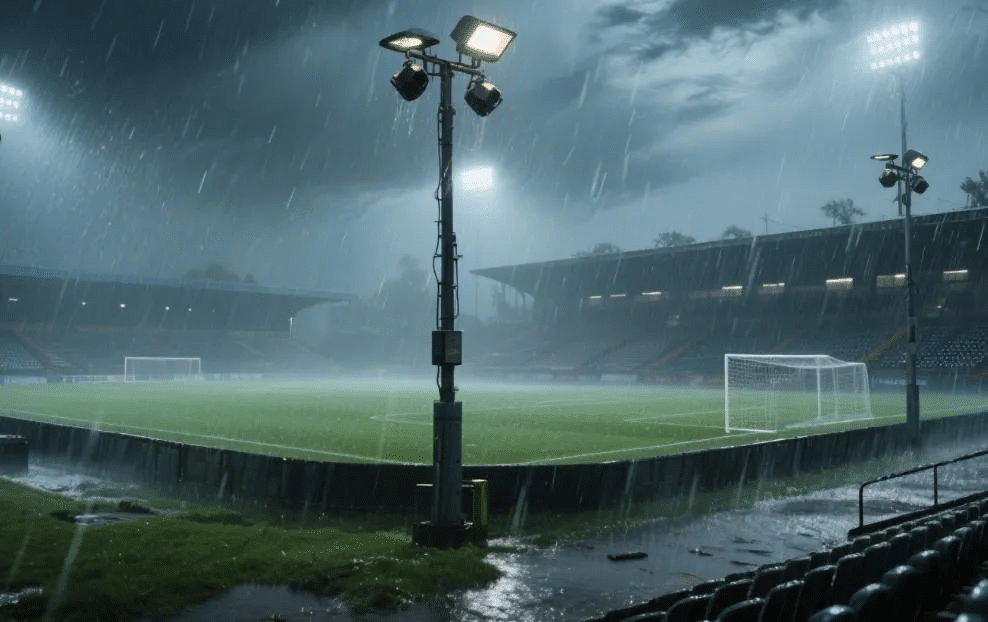
Outdoor stadium lighting must withstand harsh environments such as wind, rain, and dust. Professional products typically achieve an IP66 protection rating or higher. The lighting interfaces are sealed with silicone gaskets, and the lamp bodies undergo anodized surface treatment, providing corrosion resistance and UV aging resistance. This ensures long-term reliability even in humid environments like coastal stadiums.
·Structural Strength·
Large venue lighting fixtures can weigh up to 10–20 kg and must withstand strong wind impacts. Professional fixtures use high-strength aluminum alloy or stainless steel for their brackets and mounting structures, passing 12-level typhoon simulation tests to ensure no shaking or detachment risks after installation.
V. Customized Solutions: Specialized Lighting Fixtures for Different Sports Scenarios
Different sports have significantly varying lighting requirements. Professional brands provide customized lighting solutions tailored to the characteristics of each sport:
· Basketball Courts (Arenas) ·
Vertical illuminance must be prioritized. Lighting fixtures are typically installed at a height of 6-8 meters, using medium-power fixtures ranging from 200-500W. Multiple fixtures are combined to achieve uniform coverage of the playing area while avoiding direct light exposure to the spectator stands.
·Football Fields·
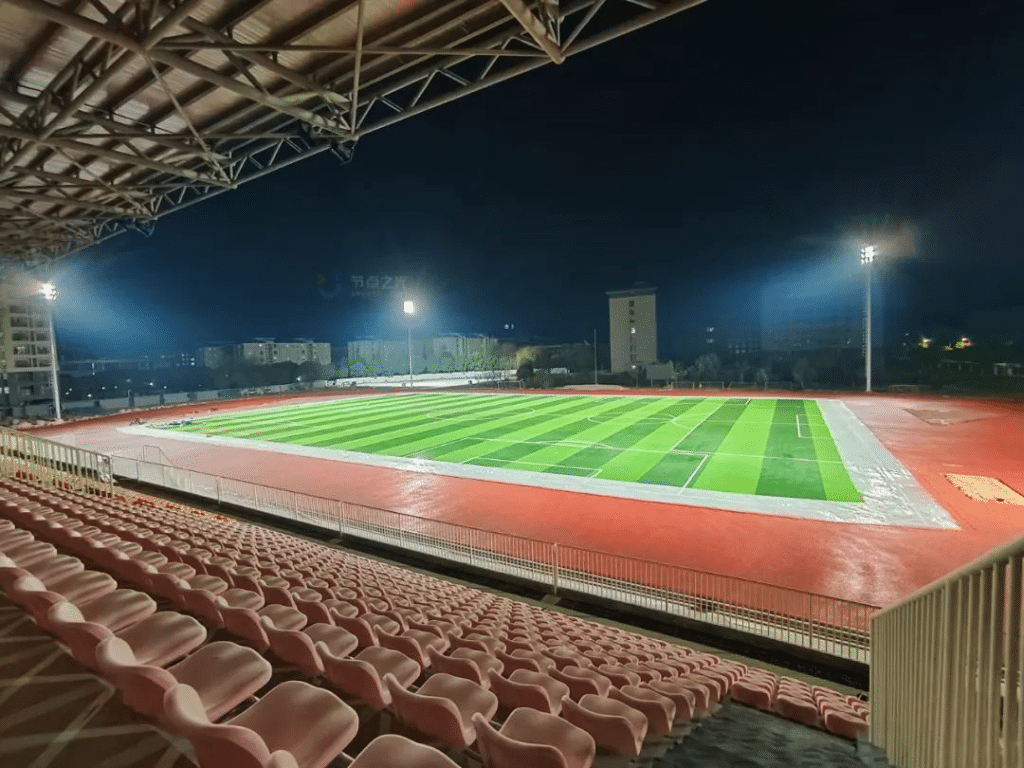
Due to the open nature of the field, high-power lighting fixtures are required, installed at heights of 15–30 meters. These are paired with multi-angle distribution ultra-wide beam lenses to ensure uniformity of illumination from the goal area to the midfield ≥0.7.
·Badminton Hall (Court)·
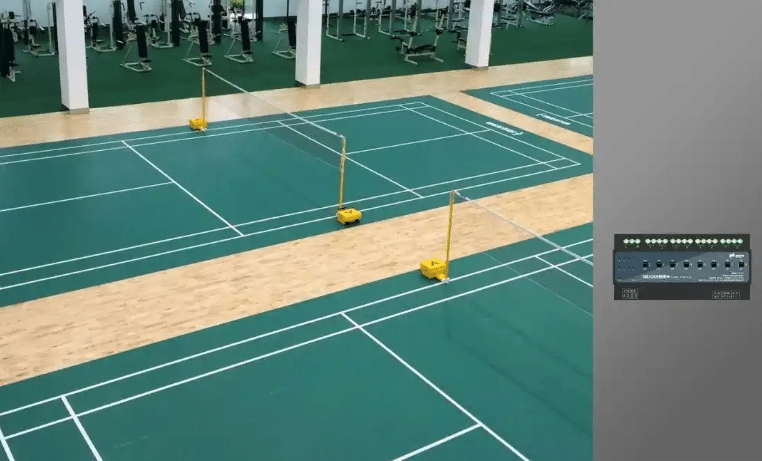
Badminton halls are extremely sensitive to glare and flicker. Lighting fixtures must use 90° narrow-beam lenses + deep anti-glare grilles, with installation positions avoiding players’ line of sight angles. Additionally, a smart control system enables rapid dimming and switching.
The value of Amasly professional sports lighting lies in integrating advantages across multiple aspects—including light source technology, optical design, and intelligent control—to achieve “precise light control, eye protection, and energy efficiency.” Every design detail, from chip selection to structural specifics, is centered around the core needs of sports environments.
Choosing Amasly professional sports lighting is not just about providing illumination for the venue; it is about creating a fair, safe, and comfortable sports environment for athletes, referees, and spectators. In the field of sports lighting, the professionalism of the lighting fixtures determines the quality of the competition—this is the core logic that makes professional sports lighting irreplaceable.
Standard: IEC60598
Related Products
 English
  Spanish (Spain)
  Arabic
  German
  French
  Russian
  Italian
  Portuguese
  Spanish (Mexico)
  Romanian
  Greek
Greek  Turkish
  Korean
  Hungarian
  Japanese
  Dutch
Dutch  Bulgarian
  Czech
Czech  Danish
  Slovak
  Ukrainian
  Thai
Thai  Vietnamese
  Indonesian
  Malay
Malay  Tagalog