
Future-Proofing Industrial Lighting: Smart Sensors in Explosion Proof vs Flame Proof Systems
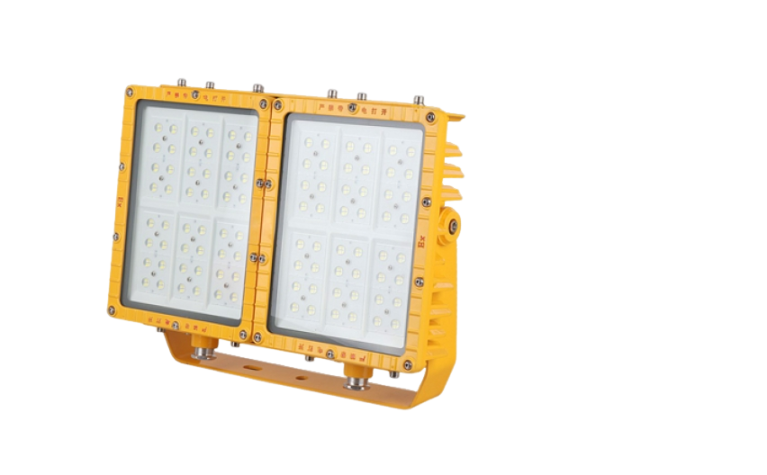
Bridging Safety and Intelligence in Hazardous Environments
Introduction: The Convergence of Safety and Smart Technology
Industrial lighting in hazardous environments—such as oil refineries, chemical plants, and mining operations—has long prioritized explosion-proof (Ex d) and flame-proof (FLP) certifications to mitigate risks.
However, the integration of smart sensor technology is revolutionizing these systems, enabling predictive maintenance, real-time hazard detection, and adaptive energy management.
This article explores how intelligent sensor integration reshapes the capabilities of explosion-proof and flame-proof lighting, offering actionable insights for safety engineers and facility managers navigating Industry 4.0 demands.
1. Technical Challenges in Sensor Integration: Industrial Lighting
A. Explosion-Proof Systems: Pressure Containment vs Sensor Sensitivity
Thermal Management: Ex d enclosures, designed to withstand internal pressures ≥1.5MPa, often trap heat from high-power LEDs. Smart thermal sensors (e.g., infrared or fiber Bragg grating) must operate within strict temperature limits (≤85°C) to avoid false alarms while ensuring ATEX/IECEx compliance.
Signal Interference: Metallic enclosures can attenuate wireless signals. Solutions include wave-guide antennas and shielded Ethernet cables, as seen in offshore oil rig deployments where 5G-enabled sensors maintain connectivity in Zone 1 areas.
B. Flame-Proof Systems: Combustion Resistance vs Sensor Durability
Material Degradation: FLP coatings (e.g., nano-ceramic layers) resist external flames but may delamulate under humidity. Embedded humidity sensors with self-diagnostic algorithms alert operators to coating failures, as implemented in LNG storage facilities.
Dust Penetration: In Zone 22 grain silos, particulate-resistant optical sensors monitor lumen output degradation, triggering automated lens-cleaning mechanisms.
2. Smart Sensor Applications Across Industries
A. Predictive Maintenance in Petrochemical Plants
Vibration Analysis: Accelerometers in Ex d floodlights detect abnormal motor vibrations in pump systems, reducing unplanned downtime by 35%.
Gas Leak Detection: FLP fixtures with integrated methane sensors (≤1ppm sensitivity) activate ventilation systems within 0.5 seconds, as tested in a 2024 Texas ethylene plant upgrade.
B. Energy Optimization in Mining Operations
Adaptive Dimming: Motion sensors in explosion-proof LEDs adjust brightness based on worker proximity, cutting energy use by 50% in South African gold mines.
Battery Health Monitoring: IoT-enabled sensors in portable FLP lamps track lithium-ion charge cycles, preventing thermal runaway risks in underground coal mines.
3. Certification and Interoperability Hurdles
A. Divergent Standards
ATEX/IECEx: Require intrinsic safety (Ex ia) certifications for sensors in Zone 0, limiting power to <1.3W. Hybrid systems using energy-harvesting sensors (e.g., piezoelectric) bypass this constraint.
NEC/UL: Focus on physical durability over data integrity, creating gaps in hybrid gas/dust environments. Dual-certified systems, such as Valmet’s DCS-integrated lighting, combine UL 844 and IP66 ratings for North American refineries.
B. Data Security in IoT Networks
Encryption Protocols: AES-256 encryption in wireless sensor networks prevents cyber intrusions, critical for lighting systems linked to plant-wide DCS platforms.
Edge Computing: Onboard processors in FLP fixtures analyze sensor data locally, reducing cloud dependency and latency in remote offshore platforms.
4. Future Trends: AI and Sustainable Materials
A. AI-Driven Hazard Prediction
Machine learning models trained on thermal imaging data from FLP fixtures predict equipment failures 72 hours in advance, as piloted in a Norwegian LNG terminal.
Digital twin simulations optimize sensor placement in Ex d systems, reducing physical testing costs by 40%.
B. Eco-Friendly Innovations
Self-Healing Polymers: Microcapsules in sensor housings repair cracks caused by thermal cycling, extending maintenance intervals by 50%.
Bio-Based Sensors: Graphene oxide sensors derived from lignin offer flame resistance without halogenated compounds, aligning with EU REACH regulations.
Related Products
 English
  Spanish (Spain)
  Arabic
  German
  French
  Russian
  Italian
  Portuguese
  Spanish (Mexico)
  Romanian
  Greek
Greek  Turkish
  Korean
  Hungarian
  Japanese
  Dutch
Dutch  Bulgarian
  Czech
Czech  Danish
  Slovak
  Ukrainian
  Thai
Thai  Vietnamese
  Indonesian
  Malay
Malay  Tagalog