
Complete Guide to Explosion Proof Junction Boxes: Principles, Installation, Inspection & Industry Applications
Contents
1. What is an Explosion Proof Junction Boxes?
2. Functions of Explosion Proof Junction Boxes
3. Product Features and Application Scope
5. Pre-installation Considerations
7. Industry Application Scenarios
10. Frequently Asked Questions
What is an explosion proof junction boxes?
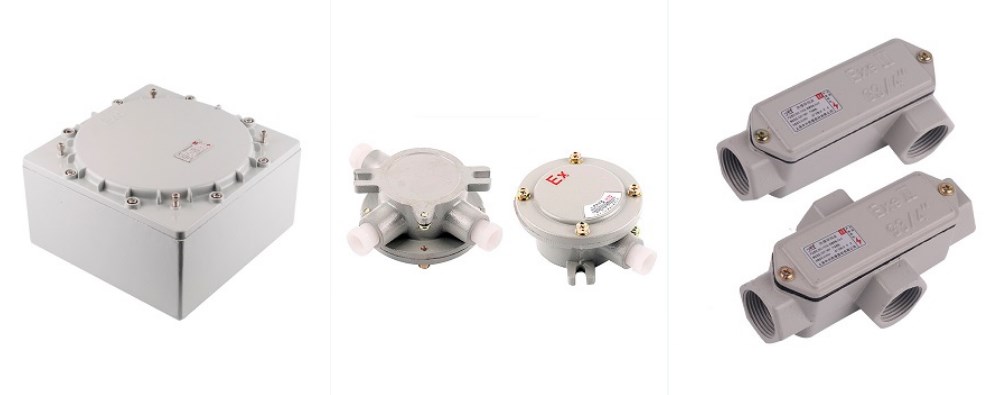
Explosion-proof junction box is a kind of explosion-proof and strong sealing connectors for circuit laying. From the appearance of a closed box. When the cable passes through it, the locking mother in and out, connection, thus effectively avoiding the phenomenon of sparks will occur in the connection. And its shell will usually use aluminum alloy to make, at the same time in order to make it better with fire resistance and corrosion resistance, often also in its surface to the spraying of some.
The role of explosion-proof junction box
Explosion-proof junction box is generally made of metal. Its role is to work in the flammable and explosive gas environment, even if the box has a circuit sparks appear, or the box is also permeated with some explosive gases, in the sparks under the action of a small range of deflagration, the box can withstand this type of situation, to prevent the junction box due to the line short-circuiting caused by the sparks on the site of the hazardous areas have an impact.
Explosion-proof junction box product features
Explosion-proof junction box scope of application
● Zone 1 and 2 explosive atmospheres;
● Combustible dust environments in Zones 20, 21 and 22;
● Suitable for iia, iib, iic class explosive environments;
● For ambient temperatures T1-T4.
Functional characteristics of explosion-proof junction boxes
Flameproof type explosion-proof grade, can be used safely in various flammable and explosive hazardous places.
How to wire an explosion-proof junction box
1. Wipe the outside of the junction box clean and strip the insulation from the cable wire section.
2. Remove the outlet gland, cable guide, sealing ring, and junction box cover.
3, the outlet gland, cable guide, sealing ring on the cable, and then the cable power core wire and grounding core wire were connected to the terminal and grounding screw, and pay attention to the bare part of the conductor is not exposed in the bow washer outside.
4. Install the sealing ring, cable guide, outlet platen and junction box cover.
5, disassembly and installation should be careful to protect the explosion-proof surface not to damage.
6, the cable shall have a natural overhang between the junction box and the non-vibrating fixed card, i.e. the cable length between the explosion-proof junction box and the non-vibrating fixed card shall be longer than its line distance.
Precautions
1, before installation, we should check whether the technical parameters marked on the explosion-proof junction box meet the national explosion-proof standards, and whether the parameters marked on the label are in line with the actual use of the situation.
2, before installation, must carefully check all the reinforcement components in the explosion-proof junction box to see if there are loose firmware, if found necessary to tighten, if you can not tighten, then suspend the installation of the junction box.
3, when connecting wires and cables, you must use seals, metal washers, and use compression nuts to press, to ensure that the sealing and coupling cables are firm, do not use the coupling port, you must use seals, metal gaskets to seal.
4, in the maintenance of explosion-proof junction box, you must first power openings at the opening of the opening for maintenance, do not open the opening of the opening can not be charged.
Explosion-proof junction box blocking inspection matters
1. Look at the explosion-proof junction box whether there is corrosion, whether there is “Ex” explosion-proof signs, all explosion-proof junction box lid bolts are complete, not all need to make up.
2. Turn all the bolts on the cover of the explosion-proof junction box clockwise and counterclockwise to see if they are loose; if they are loose, tighten them with a tool.
3. Look at the pipeline leak detector explosion-proof junction box reserved line mouth whether metal plug, if no plug, need to install metal plug or insulating sealant mud for temporary blocking, blocking should be tight, there can be no gap.
4. Turn the plug clockwise and counterclockwise by hand to see if it is loose, and tighten it with a tool if it is loose. Cannot use the factory plastic dust cover instead of the metal plug of the reserved wire opening.
5. Rotate all the explosion-proof junction box at both ends of the protection pipe mouth threaded connection is loose, if loose, use tools to tighten.
6. Look at the explosion-proof junction box at both ends of the protection of the pipe mouth threads without corrosion, the effective engagement of the threaded connection is not less than 6 wire. In the threads should be coated with power composite grease or conductive anti-rust grease. Shall not be wrapped on the threads of hemp or insulating tape and other paint.
7. Explosion-proof junction box cover to see whether the inlet and outlet have explosion-proof sealing ring, if not, need to be installed, or in the inlet and outlet temporarily with insulation sealing mud for blocking.
8. If there is no metal gasket, it is necessary to set metal gasket or temporary sealing with insulating sealing mud blocking. Sealing should be tight, no gap.
Explosion-proof junction box installation precautions
1. Pre-installation precautions should be checked before installation of the technical data on the nameplate is consistent with the actual use of the situation; check whether all fasteners are loose, if loose should be tightened; junction box grounding inside and outside must be good and reliable; installation of the cable through the sealing ring, metal gaskets, with the compression nut compression to ensure that the sealing and the cable shall not be loose, do not use the junction of the mouth of the application of seals and metal gaskets to be blocked; maintenance and inspection must disconnect the power supply before opening the cover. Sealing ring and metal gasket should be used to block; the cover can be opened only after disconnecting the power supply during maintenance and inspection.
2. Installation precautions shell inside and outside the establishment of grounding devices, installation must be close to the ground; installation on the spot can not exceed the instructions on the application of the requirements of the site, can not independently dismantle and replace the parts of the commodity; should follow the “switch off the power supply to open the table cover” standard; according to the diameter of the imported cable line to select the appropriate nominal diameter of the sealing ring Specification, on the spot should be twisted to tighten the clamping nut, explosion-proof junction box installation manual to make the cable sealing, do not import the cable line socket should be carried out to plug the leakage.
Industry Application Scenarios
Petrochemical Industry
In refineries and chemical plants, explosion-proof junction boxes are used to connect various instruments, sensors, and control systems, ensuring safe operation in flammable gas environments.
Pharmaceutical Industry
In pharmaceutical workshops containing flammable substances such as alcohol and solvents, explosion-proof junction boxes protect electrical connection points to prevent sparks from causing accidents.
Food Processing and Storage
In places with dust explosion hazards like flour mills and granaries, explosion-proof junction boxes prevent dust from entering electrical connections and causing explosions.
Mining Industry
In underground workplaces such as coal mines, explosion-proof junction boxes are used for electrical connections in lighting, ventilation, drainage systems, etc.
Paint and Coating Production
In volatile solvent environments, explosion-proof junction boxes ensure the safe operation of electrical systems.
Selection Guide
Material Selection
- Aluminum Alloy: Lightweight, good corrosion resistance, suitable for most environments.
- Stainless Steel: Stronger corrosion resistance, suitable for marine or highly corrosive environments.
- Engineering Plastic: For certain specific explosion-proof ratings and corrosive environments.
Protection Level Selection
- IP65: Dust-tight and protected against water jets, suitable for outdoor environments.
- IP66: Protected against powerful water jets, suitable for environments that may be washed with water.
- IP67: Protected against temporary immersion, suitable for environments that may be temporarily submerged.
Size Selection
Choose the appropriate junction box size based on the number of cables, their diameters, and connection methods, ensuring sufficient space for safe connections.
Certification Standards
Ensure the product has relevant explosion-proof certifications, such as:
- ATEX (Europe)
- IECEx (International)
- UL (United States)
- GB (China)
Maintenance and Care
Regular Inspection Schedule
- Monthly Inspection: Visual inspection, bolt tightness check.
- Quarterly Inspection: Seal integrity check, ground continuity test.
- Annual Inspection: Complete disassembly inspection, internal cleaning, integrity check of all components.
Common Issue Handling
- Seal Aging: Replace promptly to ensure sealing performance.
- Bolt Corrosion: Use anti-corrosion bolts or replace regularly.
- Internal Moisture: Check sealing performance, add desiccant if necessary.
Frequently Asked Questions
Q: What is the difference between an explosion-proof junction box and a regular junction box?
A: Explosion-proof junction boxes have stronger sealing and structural strength, capable of withstanding small internal explosions without affecting the external environment, whereas regular junction boxes lack this capability.
Q: How to determine if an explosion-proof junction box is still safe to use?
A: Regularly check if the explosion-proof marking is clear, if all fasteners are complete and tight, if seals are intact and not aged, and if grounding is sound.
Q: What tests are required after installing an explosion-proof junction box?
A: Ground resistance tests, insulation resistance tests, and sealing performance tests should be conducted to ensure all parameters meet requirements.
Q: What is the service life of an explosion-proof junction box?
A: Under normal conditions, a correctly installed and maintained explosion-proof junction box can last 10-15 years, but the specific lifespan depends on the usage environment and maintenance conditions.
Q: Can explosion-proof junction boxes be modified by oneself?
A: Absolutely not. Any modification may compromise its explosion-proof performance. All work must be performed by professionals following the manufacturer’s guidelines.
Relevant Standard References: GB 3836, IEC 60079, ATEX 2014/34/EU
 English
  Spanish (Spain)
  Arabic
  German
  French
  Russian
  Italian
  Portuguese
  Spanish (Mexico)
  Romanian
  Greek
Greek  Turkish
  Korean
  Hungarian
  Japanese
  Dutch
Dutch  Bulgarian
  Czech
Czech  Danish
  Slovak
  Ukrainian
  Thai
Thai  Vietnamese
  Indonesian
  Malay
Malay  Tagalog