
How to Choose the Right LED Flood Lights? These 5 Key Points You Must Know!
LED flood lights are the top choice for high efficiency and energy savings. Five core factors guide your precise decision-making: Power matching for scenarios delivers high luminous efficacy and low electricity costs; Color temperature and CRI shape ambiance; IP protection adapts to environments; Heat dissipation design ensures longevity; Smart control enables flexible energy savings. Choose certified products and prioritize after-sales service. Amasly Lighting helps you create safe and efficient lighting solutions.
In modern commercial and landscape lighting, LED floodlights have become the preferred solution for buildings, venues, and outdoor landscapes due to their energy efficiency, long lifespan, and stable light output. However, with the vast array of LED flood lights products on the market, how do you choose the most suitable model? The following five core factors will help you make an informed decision.

I. Define Lighting Requirements: Power and Luminous Efficiency
The power rating of an LED flood lights determines its brightness and coverage area. Select the appropriate power based on your application: opt for 30-50W for small commercial spaces or decorative landscaping, while large buildings or plazas require 100W or higher. Additionally, pay attention to the product’s **luminous efficacy (lm/W)**—higher values indicate greater energy efficiency, significantly reducing electricity costs over time.
II. Color Temperature and Color Rendering Index: Creating the Ideal Ambiance
Color Temperature (K) directly influences the perceived warmth or coolness of lighting. For instance, 3000K warm light creates cozy atmospheres, while 5000K white light highlights architectural details. **Color Rendering Index (Ra)** determines object color accuracy—products with Ra≥80 faithfully reproduce illuminated colors, making them ideal for color-critical settings like art galleries and retail spaces.
III. Protection Rating: Adapting to Complex Environments
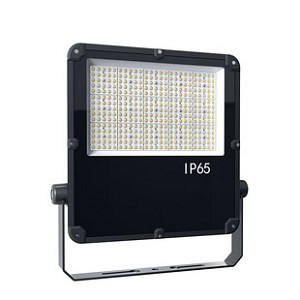
Outdoor LED flood lights require high protection ratings. IP65 is the baseline standard, offering resistance to water jets and dust; IP66 or IP67 is more suitable for rainy or dusty regions. When selecting, confirm the protection rating based on the installation environment (e.g., wall, ground, underwater) to prevent short circuits or corrosion from water ingress that could shorten the luminaire’s lifespan.
IV. Heat Dissipation Design: Key to Longevity
A LED fixture’s heat dissipation directly determines its lifespan. Premium products typically feature **aluminum alloy housings with finned heat sink structures** to ensure rapid heat removal. When purchasing, review the product’s heat dissipation specifications or opt for reputable brands to prevent accelerated light decay caused by inadequate cooling.
V. Smart Control: Enhancing Flexibility
With IoT advancements, LED floodlights featuring **dimming/color adjustment and remote control** are becoming mainstream. Via mobile apps or smart systems, users can effortlessly adjust brightness, color temperature, or even preset scene modes (e.g., holiday light displays), balancing energy efficiency with personalized needs.
The performance and quality of LED floodlights directly impact lighting outcomes and investment returns. Prioritize products certified by CCC, CE, and RoHS, and evaluate brand after-sales service (e.g., warranty duration, technical support). As a leading LED lighting solutions provider, Mingshida offers a full range of cost-effective floodlights with customization options to help you create safe, efficient, and aesthetically pleasing lighting environments.
Standard: IEC60598
Related Products
 English
  Spanish (Spain)
  Arabic
  German
  French
  Russian
  Italian
  Portuguese
  Spanish (Mexico)
  Romanian
  Greek
Greek  Turkish
  Korean
  Hungarian
  Japanese
  Dutch
Dutch  Bulgarian
  Czech
Czech  Danish
  Slovak
  Ukrainian
  Thai
Thai  Vietnamese
  Indonesian
  Malay
Malay  Tagalog