
From Brightness to Durability: Core Considerations for Selecting Industrial LED High Bay Lights
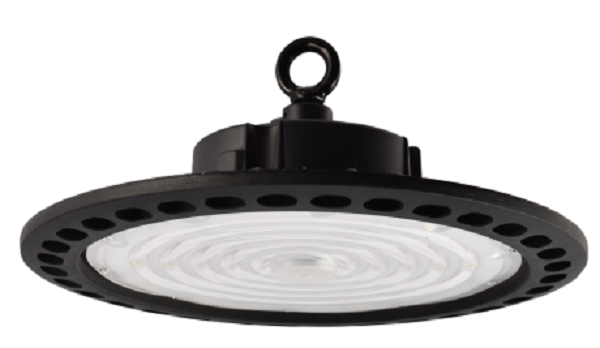
In industrial facilities, lighting systems directly impact production efficiency and operational costs. LED high bay lights have become the mainstream choice due to high luminous efficacy, long lifespan, and energy efficiency. However, performance varies significantly across products. How to make precise purchasing decisions? This article outlines four critical dimensions to empower data-driven selections.
1. Brightness Matching: Precision Calculation to Avoid Waste
Brightness is the primary metric for industrial lighting, requiring scientific design based on facility layout and operational needs:
1.1 Luminous Flux (lm) & Illuminance (lx)
- Luminous flux determines total brightness. For facilities with 8-10m ceiling heights, choose lights with ≥30,000lm per unit.
- Zoned illuminance planning: Precision machining areas require 500-750lx, while warehouses need 200-300lx. Use the formula: Total Luminous Flux = Area × Target Illuminance ÷ Utilization Factor to estimate fixture quantities.
1.2 Color Temperature & Color Rendering
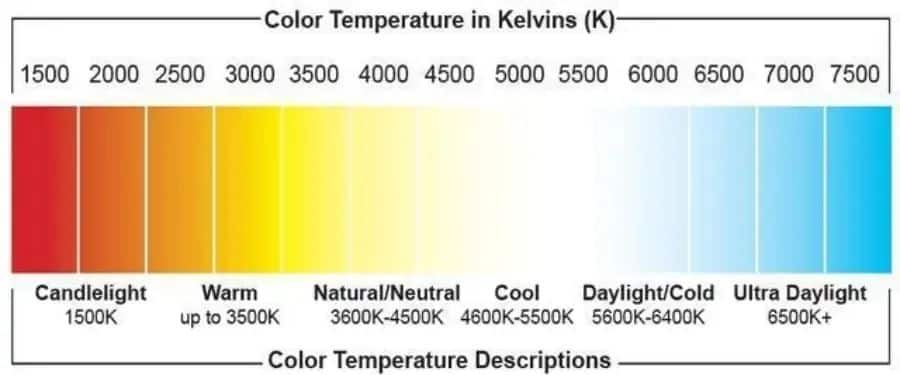
- 4000K-6000K natural white enhances focus; avoid >6500K high-color temperatures to prevent eye strain.
- Color Rendering Index (CRI): Ra >80 for general areas; Ra >90 for quality inspection zones.
2. Durability: Surviving Harsh Industrial Environments
Industrial settings face dust, vibrations, and temperature fluctuations. Durability dictates maintenance costs and lifespan:
2.1 Material & Heat Dissipation
- Die-cast aluminum housings ensure strength and heat dissipation; avoid low-grade plastics prone to deformation.
- Thermal design must keep chip temperature ≤75°C. Multi-fin aluminum structures with airflow channels slow lumen depreciation.
2.2 Protection & Vibration Resistance
- IP65 is the baseline (dustproof and water-jet resistant). Chemical plants require IP66/IP67.
- Vibration resistance ≥Grade 5 to prevent component loosening.
Case Study: A lithium battery workshop using IP67-rated aluminum lights achieved zero failures in 3 years under acidic conditions, reducing annual maintenance costs by 35%.
3. Energy Efficiency & Lifespan: Long-Term Cost Control
3.1 Luminous Efficacy (lm/W)
- Higher efficacy = lower energy consumption. 130-150lm/W is standard; 180lm/W+ models offer long-term ROI despite higher upfront costs.
3.2 Lifespan & Lumen Maintenance
- 50,000-hour lifespan requires premium drivers (e.g., Infineon) and thermal systems. Prioritize L70 standards (time until 70% lumen retention).
- Avoid low-quality electrolytic capacitors. Opt for Japanese/Taiwanese brands (Nichicon, CapXon).
Data Insight: Upgrading from 120lm/W to 160lm/W fixtures saved a facility $4,200 annually, recouping cost differences in 1.5 years.
4. Installation & Brand Support
4.1 Mounting Flexibility
- Suspension mounts for ceilings >10m; track systems suit flexible production lines.
- Modular designs enable front-end maintenance, eliminating overhead disassembly.
4.2 Brand Reliability
- Choose certified suppliers like Amasly Industrial Lighting, verifying ISO certifications and project portfolios.
- Demand ≥3-year warranties and clear SLA terms (e.g., 24-hour response) to avoid hidden service costs.
Conclusion
Selecting industrial LED high bay lights requires moving beyond price-driven decisions. By balancing brightness, durability, energy efficiency, and service systems, businesses can enhance safety, cut lifecycle costs, and accelerate green transformation under global “dual-carbon” goals. Invest wisely to empower sustainable industrial operations.
Related Products
 EN
EN  ES
ES  AR
AR  DE
DE  FR
FR  RU
RU  IT
IT  PT
PT  ES_MX
ES_MX  RO
RO  EL
EL  TR
TR  KO
KO  HU_HU
HU_HU  JA
JA  NL
NL  BG
BG  CS
CS  DA
DA  SK
SK  UK
UK  TH
TH  VI
VI  ID
ID  MS
MS  TL
TL